Deck and Exterior Timber: Painting vs Staining in Brisbane's Climate
Deck and Exterior Timber: Painting vs Staining in Brisbane's Climate
The right finish for a Brisbane deck or verandah depends on what the timber is, how it is used and how much sun and rain it takes, not on which product is fashionable this year. Paint, stain and oil each protect exterior timber in a different way, and each fails in a different way when the wrong one is chosen. Smart Quality Painting scopes exterior timber across Brisbane's western corridor, from Oxley to Bardon, by looking at the timber first and choosing the finish second. This guide compares the three options, sets out the preparation that matters more than the product, and explains how the subtropical weather shapes the timing.
Three Finishes, Three Ways of Protecting Timber
Paint forms a film on top of the timber, stain and oil soak into it, and that single difference explains almost everything about how each one looks, wears and is maintained. Smart Quality Painting uses all three on exterior timber depending on the surface, so it helps to be clear about what each does.
Film-forming paint
Exterior acrylic paint sits as a continuous skin over primed timber. It gives a solid colour, hides grain and old repairs, and offers the strongest barrier against ultraviolet light and water while the film stays intact. When it fails it does so visibly: the film cracks, lifts or peels, usually where water has got behind it at end grain, joints or fixings. Repair means sanding back the failed area, priming and repainting.
Penetrating stain
A penetrating stain carries pigment into the surface fibres of the timber rather than sitting on top. It leaves the grain visible, and with enough pigment it still gives useful ultraviolet protection. Because there is no film, it does not peel; it fades and wears thin instead. Recoating is usually a clean, light sand or wash and another coat, without stripping. Semi-transparent and solid-colour stains sit on a spectrum between oil and paint, with solid stains behaving more like a thin paint.
Oil
Decking oil feeds the timber and brings up its natural colour. It is the easiest of the three to reapply and the shortest-lived, especially in full sun, because the oil weathers out of the surface. Oils with added pigment last better than clear ones. Oil suits homeowners who are happy to recoat regularly and who want the timber to look like timber.
When Paint Suits Exterior Timber
Paint is the right choice for exterior timber that needs a solid colour, that is already painted, or that is made up of many small profiles where a uniform finish matters more than visible grain. On Queenslanders in the western suburbs, that covers most of the timber that is not underfoot.
Weatherboards, verandah posts, balustrade rails, fretwork, window frames, fascias and lattice are all normally painted. They are vertical or sheltered, they are not walked on, and a film coating on them lasts well because water sheds off rather than pooling. Previously painted timber almost always stays painted, because taking a film coating back to bare timber to stain it is a large stripping job and on a pre-1970 home may involve lead-bearing layers; see our lead paint guide for what that means.
Paint is a poor choice for deck boards in most cases. A horizontal, walked-on surface flexes, holds water in the gaps and takes foot traffic, and a film coating on it wears through at the high-traffic path and lifts along the board edges. A painted deck can work on a covered verandah floor with the correct floor-grade paint, but an open deck is usually better stained or oiled. Smart Quality Painting will say so at the inspection rather than paint a deck that will need stripping in a couple of seasons.
When Stain or Oil Suits
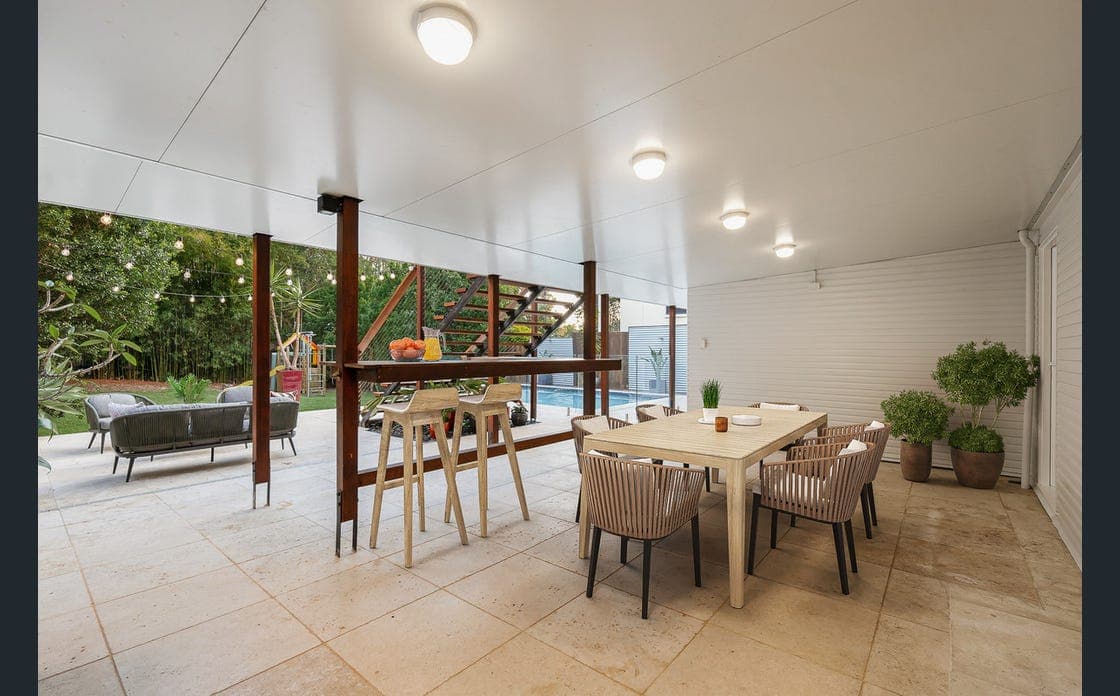
Stain or oil suits open decks, steps, hardwood handrails and any timber where you want the grain to show and are prepared to recoat as it wears rather than strip it when it fails. In Brisbane that is most decks.
Penetrating stain is the usual middle ground. It gives more ultraviolet protection than clear oil, tolerates the wet-dry cycle of an uncovered deck, and does not peel. Solid-colour stains can also refresh a tired deck with mixed board replacements, hiding the difference between old and new timber while keeping the texture of the grain. Oil suits decks under a roof or in dappled shade, where the sun is not stripping it out every summer, and it suits owners who like the ritual of an annual recoat.
The choice between them often comes down to how much maintenance the household will actually do. A finish that needs frequent recoating and does not get it ends up looking worse than a more durable one that was refreshed less often. That conversation is part of Smart Quality Painting's scope for any deck, and the exterior painting service page describes how the finish and the maintenance expectation are recorded in the written quote.
Preparation Decides the Result
On exterior timber the preparation matters more than the brand of finish, because no coating bonds to a dirty, mouldy, greasy or wet surface. Skipping a preparation step on a deck shows up as patchy colour and early failure within a single summer.
Cleaning and mould
Brisbane's humidity grows mould, mildew and algae on shaded timber, and green or black staining has to be killed and washed off before any coating. A deck cleaner or mild oxygen-based bleach solution, scrubbed and rinsed, deals with most of it. Pressure washing is used carefully and at low pressure, because high pressure furs the surface of softwoods and drives water deep into the boards.
Tannin bleed on hardwoods
Australian hardwoods such as spotted gum, ironbark and merbau carry natural tannins that leach out as brown or red staining, especially on new timber and after rain. Tannin will bleed through a light paint or stain and stain the concrete or paving below. New hardwood is left to weather and washed several times to draw the tannin out before finishing, and painted hardwood uses a stain-blocking primer. Merbau in particular bleeds heavily and should be scoped as such.
Sanding
Sanding removes grey, weathered fibres and old finish, and opens the surface so stain or oil can penetrate. On previously oiled timber it is a light sand for adhesion. On previously painted timber it is a full sand back or strip where the film has failed, with lead-safe methods on older homes. Sanding dust is cleaned off completely before coating; a stain applied over dust sits on the dust rather than in the timber.
Moisture content
Timber has to be dry before it is coated, and in Brisbane that is not a given. Boards that were washed yesterday or rained on two days ago can still be too wet inside, particularly on shaded southern decks. Smart Quality Painting checks moisture with a meter before coating and waits when it reads high. Coating wet timber traps the moisture under the finish, which is the most common cause of blistering paint and cloudy stain.
Handrails, Fretwork and Verandah Timber on Queenslanders
Queenslander verandahs combine several timber elements that each need a different approach, and a good scope names them separately rather than lumping them as "verandah". This is where the painting-versus-staining decision is often mixed on the one house.
Verandah floors on older homes in Sherwood, Graceville and Bardon are often tongue-and-groove hardwood under a roof. They can take a floor-grade paint or a penetrating stain, and the existing finish usually decides which. Handrails and balustrade tops are a friction surface that is touched constantly, so they need a durable finish that can be recoated without stripping; on many homes the rail is painted and the balusters are painted to match, though a stained hardwood rail over painted balusters is a traditional look that still works.
Fretwork, brackets and valance boards are decorative, thin and full of end grain. They are always painted, because a film coating protects the end grain that stain cannot seal. Preparation on fretwork is slow and mostly by hand, and any brittle or rotten sections are recorded for repair by a carpenter before painting. Posts and stumps are painted, with particular attention to the base where water sits. Our Queenslander restoration service page covers how these items are itemised in the scope, and the Queenslander restoration guide covers colour and heritage considerations.
Maintenance Cycles: What to Expect in General Terms
Every exterior timber finish in Brisbane needs recoating, and the honest way to think about it is by exposure rather than by a fixed number of years. Smart Quality Painting does not promise a lifespan for any finish, because a north-facing deck in Kenmore and a covered southern verandah in Toowong will wear at very different rates with the same product.
As a general pattern, oil wears fastest and is recoated most often, penetrating stain sits in the middle, and a sound paint film on vertical timber lasts longest before it needs attention. Horizontal surfaces wear faster than vertical ones. Full sun wears everything faster than shade, and timber under trees grows mould faster than timber in the open. The way to extend any finish is to wash it once or twice a year to remove mould and grit, recoat stain or oil before it wears through to bare timber, and touch up paint at the first sign of cracking at joints rather than waiting for peeling. Recoating a stained deck before it fails is a light job; restoring one that has gone grey and bare is a full preparation again.
Weather Windows for Exterior Timber Work
Exterior timber in Brisbane is coated in dry, mild conditions, and the calendar matters less than the forecast for the days on either side of the job. The constraints are the same ones that apply to any exterior work here, with a few that are specific to timber.
Timber needs to be dry to the core, not just on the surface, so a run of dry days before coating matters more than a dry day on the day. Summer afternoons bring heat that flashes off water-based coatings and storms that wash uncured finish into the garden, so work starts early and follows the shade. Winter mornings can leave dew on horizontal boards until mid-morning, and coating over dew on a deck gives a cloudy, poorly bonded result. Humidity slows curing of everything, and oils in particular can stay tacky for days in a humid week. The cooler, drier months are the most reliable window for a deck, though a covered verandah can be done in most weeks of the year. Our exterior painting weather guide goes into the seasons in more detail, and typical Brisbane market ranges for exterior work are covered in the house painting costs guide as attributed market figures rather than Smart Quality Painting prices.
Frequently Asked Questions
Should I paint or stain my deck in Brisbane?
For an open, walked-on deck, a penetrating stain or pigmented oil is usually the better choice because it wears rather than peels. Paint suits covered verandah floors with a floor-grade product and all the vertical timber around the deck.
Can I stain a deck that was previously painted?
Only after the paint has been fully stripped or sanded back to bare timber, which is a large job and on pre-1970 homes may involve lead-bearing layers. In most cases a previously painted deck is repainted or, if the film has failed, treated as a preparation project first.
Why is my new hardwood deck leaving brown stains on the concrete?
That is tannin bleed from the timber, common on merbau and other dense hardwoods. It is drawn out by weathering and repeated washing before the finish goes on, and it is why new hardwood is not coated straight away.
How often does a deck need recoating in Brisbane?
It depends on the finish and the exposure rather than a fixed period. Oil in full sun needs the most frequent attention, stain less, and paint on vertical timber the least. Washing the timber regularly and recoating before it wears bare extends every option.
Can you paint the handrail and stain the deck boards?
Yes, mixing finishes on one verandah is common and often the right call. Rails, balusters and fretwork are painted for durability and end-grain protection, while the boards are stained or oiled so they wear rather than peel underfoot.
Next steps with Smart Quality Painting
If you have a deck, verandah or exterior timber in Kenmore, Toowong, Bardon or anywhere across Brisbane's western corridor, from Oxley to Bardon, Smart Quality Painting will assess the timber and the existing finish on site and give you a written scope that names the preparation and the finish for each element. We respond to every enquiry within one business day.